
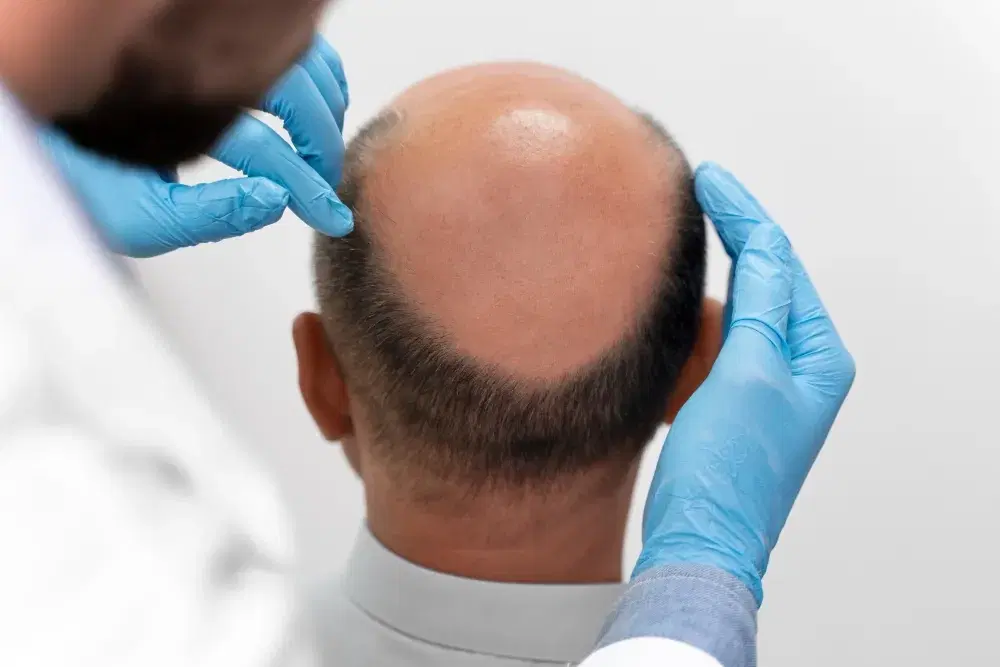
Turkey has become a common destination for international patients considering hair transplantation, with clinics offering different surgical approaches, accommodation options and treatment packages. Yet the country or technique alone does not determine whether a transplant will look natural. Donor management, diagnosis, hairline planning, graft handling, implantation direction and the experience of the medical team all influence the final result.
For someone researching an FUE hair transplant in Turkey, understanding these details is more useful than choosing a clinic based only on the largest advertised graft number.
What Is an FUE Hair Transplant?
FUE stands for Follicular Unit Excision. The technique focuses on the way donor follicles are harvested.
Hair naturally grows in small follicular units that may contain one or several hair shafts. During FUE, these units are individually separated from the surrounding skin with small circular punches and removed from the donor region. Modern punches commonly fall within a small diameter range, although the exact instrument varies according to hair characteristics and surgical technique.
After harvesting, the follicles are prepared for transplantation. Small recipient sites are created in the thinning or bald part of the scalp, and the grafts are implanted according to the planned density, direction and angle.
This distinction matters because FUE describes harvesting, not every stage of hair transplantation. Different implantation techniques can be used after FUE harvesting. A clinic may therefore combine FUE with forceps placement, implanter pens or another recipient-site technique.
Who Is a Good Candidate for FUE Hair Transplantation?
Not everyone experiencing hair loss should immediately undergo surgery. Before an FUE procedure, the pattern of hair loss, donor density, age, scalp health, family history and likelihood of future thinning should be considered. A strong transplant plan looks several years ahead rather than focusing only on the current bald area.
Factors that can support candidacy include:
A suitable donor area with enough stable follicles to provide useful coverage without obvious thinning.
A clear diagnosis of hair loss, rather than unexplained or rapidly changing shedding.
Realistic density expectations, particularly when a large area needs coverage.
Stable or reasonably predictable hair-loss progression, allowing a long-term hairline strategy to be developed.
Healthy recipient skin without an uncontrolled inflammatory or infectious scalp condition.
Sufficient donor reserves for the future, especially in younger patients who may continue to lose native hair.
General medical suitability for surgery and the ability to follow postoperative instructions.
Hair thickness, curl and contrast between the hair and scalp can also affect how dense a transplant appears. Two patients receiving the same number of grafts may therefore achieve noticeably different visual coverage.
The Donor Area Is a Limited Resource
The donor area deserves as much attention as the new hairline.
When an FUE graft is removed, that particular follicular unit does not simply regenerate in the original extraction point. This means donor hair needs to be treated as a limited resource. Removing too many grafts from the same area can leave visible thinning, irregular density or a patchy appearance.
This problem is known as overharvesting and is one of the most characteristic donor-area complications associated with poorly planned FUE. It may produce a moth-eaten appearance that becomes especially visible with short haircuts.
A high graft number is therefore not automatically a sign of a better transplant. The safer question is how many grafts can be removed while preserving the appearance and future usefulness of the donor region.
A patient in their twenties may need donor hair again years later if hereditary hair loss continues. Using nearly all available grafts during the first procedure can make future correction difficult.
How the FUE Procedure Is Performed
The procedure generally begins with examination and design. The intended hairline, thinning areas and donor zone are marked, and the treatment plan is reviewed before harvesting starts.
Local anesthesia is commonly used to numb the scalp. The donor hair may be shaved to make individual follicular units easier to identify and harvest. Each selected follicular unit is then separated with a small punch and removed carefully.
Once harvested, grafts need to be protected until implantation. Their structure and number of hairs can be considered when deciding where each graft should be placed.
Recipient sites are created according to the hairline design and desired distribution. Implantation is then performed with careful attention to the natural direction of surrounding hair.
The operation can last several hours, particularly when a large number of grafts are required. Procedure time varies according to graft numbers, donor characteristics, surgical approach and team organization.
A Natural Hairline Is More Than a Straight Line
Patients often spend most of their consultation discussing density, but hairline design can have a greater effect on whether the finished transplant looks believable.
A natural hairline is rarely perfectly straight or completely symmetrical. It normally contains subtle irregularities and gradual transitions in density. Single-hair follicular units are particularly useful around the front edge because placing larger multi-hair grafts directly along the first line can create a plugged appearance.
Hair angle is equally important. The transplanted shafts should leave the scalp in a direction compatible with naturally occurring hair. Poor recipient-site planning can make hairs stand too upright or point against the surrounding growth pattern. Research on recipient-site design shows that graft angle, direction and spacing influence both appearance and how densely grafts can reasonably be placed.
A very low hairline may look attractive immediately after surgery but become inappropriate as a patient ages or continues losing native hair. Conservative long-term planning often produces a more sustainable result.
FUE and DHI Are Not Opposite Procedures
One common source of confusion when comparing Turkish hair transplant clinics is seeing packages labelled “FUE” and “DHI” as though the two names describe completely separate operations.
FUE primarily tells you how follicles are harvested. DHI usually refers to a method of implanting harvested grafts, often with a pen-shaped implanter.
A procedure can therefore involve FUE harvesting followed by an implantation technique marketed as DHI.
Rather than asking which name is universally superior, it is more useful to ask how the donor area will be harvested, who creates the recipient plan, how follicles will be handled and which implantation method is best suited to the individual case.
Recovery During the First Two Weeks
Immediately after an FUE transplant, tiny extraction sites are visible in the donor area and small crusts usually form around the newly implanted follicles.
Mild redness, tenderness, itching and swelling can occur during early healing. Scabbing commonly remains for several days and may take roughly one to two weeks to clear, depending on the individual and the postoperative protocol.
Patients should not aggressively scratch or remove crusts. Washing techniques, sleeping position, exercise restrictions and recommendations about hats or sun exposure can differ between clinics, so personalized postoperative instructions should take priority over generic internet routines.
The donor region often becomes less noticeable relatively quickly, particularly once surrounding hair begins to grow. The recipient area usually takes longer to look completely normal because redness and shedding can continue after the first healing phase.
Shedding Does Not Mean the Transplant Has Failed
One of the most confusing stages occurs when newly transplanted hairs begin to fall out.
Many visible hair shafts shed after transplantation while the follicles remain beneath the scalp. New growth then develops gradually over the following months.
This process means a hair transplant should not be judged after three or four weeks. Early growth can initially appear thin, uneven and softer than expected. Density becomes easier to assess as more follicles enter their growth cycle and the new hairs mature.
The frontal area may also seem to develop differently from the crown. Crown restoration is visually challenging because the area can be large and the natural hair forms a whorl, requiring many follicles to create the impression of coverage.
For most patients, patience is part of the treatment.
FUE Does Leave Small Scars
The phrase “scarless hair transplant” is widely used in advertising, but it can create unrealistic expectations.
FUE avoids the single linear scar created by strip harvesting, yet every follicular unit must still leave the scalp through a small opening. These extraction sites heal as tiny individual scars.
When harvesting is distributed appropriately, the marks may be difficult to notice, especially with some hair length. If too many follicles are removed from one region, however, both reduced density and extraction marks can become more visible.
Skin type, healing characteristics, punch size, extraction distribution and the number of previous procedures can all influence donor appearance.
This is another reason why “maximum graft” promises should be viewed carefully.
Understanding the Possible Risks
FUE is a surgical procedure, and no surgical technique is completely free of complications.
A recent review of FUE complications described postoperative problems such as pain, swelling, bleeding and infection, along with donor-area issues including visible depletion, pigment changes, cysts and scarring. Recipient-area problems can include folliculitis, prolonged redness, unnatural growth and, rarely, tissue damage.
Temporary shedding of nearby native hair can also occur after transplantation.
Many complications are uncommon, but their possibility is one reason a hair transplant should be treated as a medical procedure rather than simply as a beauty service.
Cosmetic complications also matter. Incorrect hairline placement, poor graft direction and obvious donor depletion can be difficult to correct even if there is no infection or medical emergency.
Can FUE Be Performed Without Shaving?
In selected cases, FUE can be performed with limited shaving or with techniques that preserve more visible hair. This can appeal to patients who do not want an obvious postoperative change in hairstyle.
However, unshaven procedures can be more technically demanding. Keeping the hair long can make follicle identification and extraction more difficult and may increase procedure time.
The choice depends on graft numbers, hair length, donor characteristics and the team's experience. A relatively small hairline procedure may be more suitable for partial shaving than a very large session requiring thousands of grafts.
For that reason, the shaving plan should be based on technical needs rather than marketing alone.
What Should You Check Before Choosing an FUE Clinic in Turkey?
International patients often compare treatment packages from a distance. Hotel quality, airport transfer and translation services may make a medical trip easier, but these conveniences reveal little about surgical quality. Current official records list healthcare providers authorized to operate within international health tourism, and these lists were updated on July 28, 2026.
Before booking, it is sensible to clarify:
Who is medically responsible for your surgery and who performs the critical parts of donor harvesting and recipient planning.
Whether the healthcare provider currently holds the appropriate authorization for treating international patients.
How your donor density will be assessed before a final graft number is recommended.
Why the suggested hairline and graft distribution suit your age and expected future hair loss.
Whether your hair-loss diagnosis is established before surgery rather than assuming every form of thinning requires transplantation.
What postoperative medical support is available if a complication appears after you return home.
What is actually included in the quoted price, including medications, follow-up care, accommodation and transportation.
Whether before-and-after photographs use comparable lighting, angles and hair styling, making results easier to judge fairly.
A high-quality consultation should be able to explain why a certain number of grafts is safe rather than simply promising the largest session available.
Why FUE Hair Transplant Cost in Turkey Varies
There is no single standard price for FUE hair transplant in Turkey.
Cost can vary according to the number of grafts, complexity of hairline reconstruction, donor characteristics, physician involvement, clinic structure, procedure length, accommodation and other services included in the package.
Some clinics quote a fixed package while others price treatment according to a graft range.
Price becomes less useful when compared without context. A lower quote may cover only the procedure, while another may include hotel accommodation and follow-up. Similarly, two clinics recommending dramatically different graft counts may actually be proposing very different donor strategies.
The goal should be to compare treatment plans, not only totals at the bottom of quotations.
Hair Loss Can Continue After a Successful Transplant
A common misconception is that having an FUE procedure permanently ends hereditary hair loss.
Transplanted follicles selected from stable donor regions may provide long-lasting growth, but the patient's existing non-transplanted hair can continue thinning. This is particularly important in younger adults whose final hair-loss pattern has not yet become clear.
Imagine restoring a dense low hairline at age 23 while the hair behind it continues to disappear through the thirties. The transplanted front may remain while an increasingly thin region develops farther back.
Long-term planning therefore considers potential progression as well as the current appearance.
Depending on the diagnosis, medical treatment may also be discussed to help manage ongoing native hair loss. Such treatments are not suitable for everyone and require an individual medical assessment.
The Best FUE Result Begins Before the First Graft Is Removed
The most important part of FUE is not simply extracting thousands of follicles. Safe harvesting requires uniform donor planning and restraint because excessive extraction can create permanent visible thinning.
The recipient area demands the same level of attention. Hairline height, graft size, direction, angle and distribution determine whether the result blends naturally with existing hair.
For patients travelling internationally, clinic selection should therefore go beyond social-media photographs and package prices. Medical responsibility, current provider authorization, donor analysis and aftercare arrangements should all be understood before treatment. Turkey maintains current authorization lists for healthcare providers working with international health-tourism patients.
A well-planned transplant does not necessarily use the highest possible number of grafts or create the lowest possible hairline. It uses the available donor hair intelligently, creates a design that suits the face and leaves enough flexibility for the future.
That long-term thinking is what turns an FUE procedure from a single day of surgery into a sustainable hair restoration plan.
Note: This article is intended for general information and does not replace an individual medical assessment. FUE suitability, donor capacity, graft numbers, hair-loss diagnosis and postoperative care should be determined after a personal evaluation.