
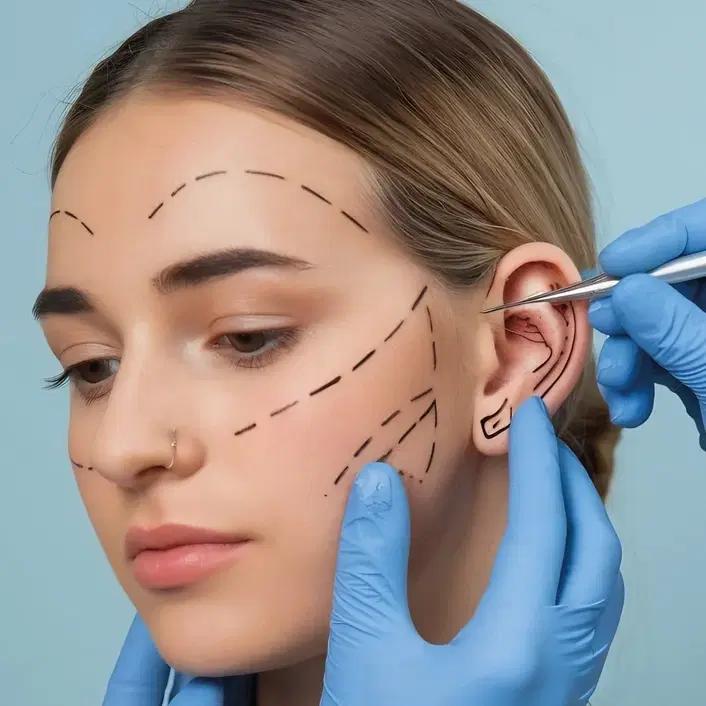
Ear Pinning Surgery Changes Appearance, Not Hearing
Prominent ears are generally related to the shape or position of the external ear rather than the structures responsible for hearing. Otoplasty therefore focuses on changing visible ear anatomy.
Some patients have both ears positioned farther away from the head than they would like. Others may be concerned because one ear projects more than the other. Differences can also develop after previous surgery, injury or congenital changes in ear shape.
Standard cosmetic otoplasty does not aim to improve hearing. Its purpose is primarily to create better proportion between the ears, head and face.
Another important point is symmetry. Natural ears are rarely identical, even before surgery. Otoplasty can reduce noticeable differences between the sides, but perfect mirror-image symmetry should not be expected.
Why Do Some Ears Appear More Prominent?
The external ear is mainly formed by cartilage covered with a relatively thin layer of skin. Small differences in cartilage development can have a significant effect on ear position.
One common reason for prominent ears is insufficient formation of the natural fold that runs through the upper part of the ear. If this fold is weak, the ear may project outward more noticeably.
Another possibility is excessive depth or projection in the central bowl-shaped area of the ear. Some patients have both features at the same time.
The surgical technique is therefore selected according to the individual cartilage problem. Treatment may involve creating or strengthening a natural fold, reshaping cartilage, adjusting projection or using sutures to maintain the new position.
This is why ear pinning should not involve simply pulling every ear backward in the same way.
Who May Be Suitable for Otoplasty?
Otoplasty may be considered by adults or children who are bothered by prominent, asymmetric or unusually shaped ears and who are suitable for elective surgery. The decision should always reflect the individual's anatomy, health and expectations rather than being based only on appearance in photographs.
Several factors are commonly considered during assessment:
Prominent ears on one or both sides that create a noticeable imbalance with the face.
Visible ear asymmetry that the patient would like to improve.
Sufficient cartilage development, particularly when surgery is being considered during childhood.
Good general health without an uncontrolled condition that could interfere with surgery or healing.
No active infection around the ear at the time of the procedure.
Realistic expectations about scars, symmetry, recovery and the degree of correction.
A personal desire for treatment, rather than undergoing surgery solely because of pressure from other people.
Willingness to protect the ears during recovery, including following instructions about sleeping, dressings and physical activity.
When otoplasty is considered for a child, emotional readiness is just as important as physical development. The child should be able to understand the process at an age-appropriate level and cooperate with postoperative care.
Adults Can Have Ear Pinning Surgery Too
Ear correction surgery is often associated with childhood, but there is no requirement that prominent ears must be treated at a young age.
Many adults choose otoplasty after living with prominent ears for years. Some have avoided short hairstyles or certain photographs because they feel uncomfortable about their ears. Others simply decide later in life that they would like to make a change.
Adult ear cartilage can sometimes be firmer than cartilage in younger patients. This may influence how the ear is reshaped, but it does not automatically prevent surgery.
The consultation should review previous ear surgery, injuries, scar formation, medication use, general medical history and the desired amount of correction before a treatment plan is created.
A Natural Result Should Not Look Over-Pinned
One of the main aesthetic risks of otoplasty is excessive correction.
Natural ears do not lie completely flat against the skull. The upper, middle and lower portions each have their own degree of projection. If the ear is pulled too tightly against the head, the result can appear artificial.
Balance is therefore more important than maximum correction.
The surgeon needs to consider how the ear looks from the front, side and back. The natural curves should remain visible after surgery, and the ear should continue to look like part of the patient's original anatomy.
When looking at otoplasty before and after photographs, paying attention to natural folds and overall projection can be more useful than simply checking whether the ears appear closer to the head.
Where Is the Otoplasty Scar?
For many prominent-ear procedures, the main incision is positioned behind the ear. This location allows the resulting scar to remain relatively concealed when viewed from the front or side.
Depending on the technique, smaller incisions may occasionally be needed elsewhere. When possible, they are placed within natural folds to reduce their visibility.
Otoplasty should still not be described as scarless surgery.
Every surgical incision heals by forming a scar. Early scars can appear red, firm or darker than the surrounding skin. Their appearance usually changes gradually during the following months.
Some people also have a greater tendency to develop thick, raised or prominent scars. Anyone who has previously experienced unusual scar formation after surgery, injury or piercing should mention this before otoplasty.
What Happens During Otoplasty Surgery?
The operation begins after the planned ear position and correction have been reviewed. Depending on the patient's age, the extent of surgery and individual medical circumstances, local anaesthesia, sedation or general anaesthesia may be considered.
The surgeon then accesses the cartilage through the planned incision.
Cartilage may be reshaped or repositioned, while internal sutures can be used to create or maintain natural folds. In patients with excessive central ear projection, the relationship between the ear and skull can also be adjusted.
After both ears have been compared, the incisions are closed and protective dressings are applied.
The exact operation differs from one person to another. Someone with only a poorly developed upper-ear fold will not necessarily require the same procedure as another patient with significant central cartilage prominence.
The First Days Require Careful Ear Protection
After surgery, a supportive dressing is commonly placed around the ears. Its purpose is to protect the new position and reduce accidental pressure during the early healing period.
Swelling, tenderness, mild discomfort and a feeling of tightness can occur. Some patients also experience itching beneath the dressing.
The ears may initially appear slightly swollen or more closely positioned than expected. Early asymmetry can also be influenced by uneven swelling.
For this reason, the appearance during the first few days should not be considered the final result.
Once the initial dressing is removed, some patients may be advised to wear a soft headband for a certain period, particularly while sleeping. The recommended duration varies according to the procedure and healing progress.
Sleeping Position Can Affect Early Recovery
Protecting the ears while sleeping is one of the practical challenges after otoplasty.
A person who normally sleeps on their side can unintentionally press an operated ear against the pillow for several hours. During early healing, unnecessary pressure should generally be avoided.
Patients may therefore be encouraged to sleep on their back for a period and use pillows to maintain a comfortable position.
Everyday activities also require some attention. Pulling tight clothing over the head, brushing long hair aggressively, putting on glasses or using headphones can place unexpected pressure on the ears.
These restrictions become easier as healing progresses, but the early period deserves more caution.
When Does the Final Otoplasty Result Become Visible?
The basic change in ear position is often noticeable relatively early, especially once bulky dressings have been removed.
However, the tissues continue to heal after that point.
Residual swelling can temporarily make the ears look thicker or slightly uneven. The incision also continues changing as the scar matures. Fine details become easier to assess once swelling has decreased.
Most patients therefore notice a meaningful difference relatively soon while the final refined appearance develops progressively.
Comparing the ears repeatedly during the first days can create unnecessary concern. One side may simply be more swollen than the other.
Otoplasty Results Are Designed to Be Long Lasting
Once the cartilage has healed in its new position, the change is generally intended to remain stable.
That does not mean the ear becomes completely incapable of changing. Internal sutures can occasionally cause problems, cartilage may partially shift and trauma can affect the result.
Revision surgery is therefore possible, although it is not required for every patient.
Small differences between the two ears should also be expected. A technically successful result does not require completely identical ears.
The objective is usually to make ear prominence noticeably less obvious while keeping the shape believable and proportionate.
What Are the Possible Risks of Otoplasty?
Although otoplasty is frequently performed as an elective cosmetic procedure, it remains surgery and should be approached accordingly. Most patients experience an uncomplicated recovery, but possible problems need to be understood before treatment.
Potential risks include:
Bleeding or haematoma, where blood collects around the operated tissues.
Infection, including infections affecting the cartilage.
Persistent or temporary changes in sensation around the ear.
Unfavourable or raised scars, particularly in people prone to abnormal scar formation.
Residual asymmetry after swelling has fully resolved.
Overcorrection, causing the ears to appear unnaturally close to the head.
Contour irregularities if cartilage heals differently from the planned shape.
Recurrence of some ear prominence if tissues partially return toward their previous position.
Need for revision surgery when the position, scar or contour remains unsatisfactory.
Increasing pain, severe swelling, fever, unusual discharge or significant skin colour changes after surgery should be assessed rather than assumed to be part of normal recovery.
Children Require a Different Kind of Consultation
Otoplasty can sometimes be performed during childhood once the ears have developed sufficiently, but the decision deserves special care.
The child's own feelings matter. Surgery should not simply be arranged because a parent personally dislikes the appearance of the ears.
The child also needs to cooperate with dressings and understand that the ears must be protected during recovery. Running, contact sports and activities that could bend or strike the ears may need to be restricted for a period.
For some families, treatment is considered before school-related teasing becomes a significant issue. Others prefer to wait until the child is older and can participate more actively in the decision.
There is no single age that automatically makes otoplasty necessary.
International Travel Should Be Planned Around Healing
One of the practical differences between local surgery and otoplasty in Turkey is that an international patient eventually needs to fly home.
A short operation does not automatically mean the shortest possible medical trip is the best choice.
The initial dressing may need to be removed or changed, and the ears should usually be reviewed before the patient travels internationally. Early postoperative problems are also easier to assess while the operating team is nearby.
Flight timing should therefore be discussed before booking travel.
An inexpensive flight two days after surgery is not particularly useful if the medical team recommends remaining locally for a longer period.
What Determines Otoplasty Cost in Turkey?
There is no universal otoplasty cost in Turkey because ear surgery can vary considerably in complexity.
A straightforward correction of bilateral prominent ears is different from revision surgery or treatment of a more complicated cartilage deformity.
Anaesthesia, operating facility, surgical time, postoperative dressings and follow-up can all influence cost. International packages may also include accommodation, airport transportation or translation services.
When comparing quotations, patients should look beyond the final total.
A lower package may exclude medication, anaesthesia or postoperative care, while a more expensive package may include non-medical services that do not change surgical quality.
The medical plan should make sense before price becomes the deciding factor.
What Should International Patients Verify Before Surgery?
Clinic comparison should focus first on the surgery and continuity of care.
Patients should know who will personally perform the procedure and who is responsible for postoperative medical decisions. The proposed technique should also be explained clearly enough that the patient understands what anatomical problem is being corrected.
It is useful to ask where scars will be located, whether both ears need exactly the same correction and how much asymmetry may reasonably remain.
Patients should also clarify how long they are expected to stay locally, when dressings will be removed and how follow-up continues after returning home.
If a complication develops abroad, there should be a clear method of contacting the responsible medical team rather than relying only on a general sales contact.
Hairstyles and Glasses May Need Temporary Adjustments
People who wear glasses should discuss whether the frames will place pressure on the incision or healing ear.
Long hair can help conceal swelling or dressings after surgery, but hair care should be gentle during early recovery. Brushes, hairdryers and styling tools can accidentally strike sensitive ears.
People who regularly wear tight helmets, headphones or protective headgear may also need temporary adjustments before returning to their normal routine.
These details may seem minor before surgery, yet they often determine how convenient the first weeks of recovery feel.
Planning them in advance can make the healing period much easier.
The Best Otoplasty Result Is Usually Subtle
Otoplasty in Turkey can provide a long-lasting improvement for people who feel that their ears project too far from the head or appear noticeably asymmetric.
The operation works by reshaping or repositioning ear cartilage rather than changing the hearing structures inside the ear. Surgical planning therefore focuses on the natural folds, cartilage strength and amount of projection present in each individual ear.
The most successful result is not necessarily the most dramatic correction.
An ear that has been pulled too tightly toward the skull can look as unusual as an excessively prominent ear. Natural contour, proportion and subtle asymmetry should remain part of the final appearance.
Scarring, swelling, temporary discomfort and the possibility of complications also need to be understood before travelling for treatment. International patients should consider who performs the surgery, how postoperative reviews are arranged and what happens if a problem develops after the journey home.
Ultimately, good ear pinning surgery in Turkey should make the ears less visually dominant without making them look obviously operated on. The strongest treatment plan achieves enough correction to improve facial balance while preserving the characteristics that make an ear look natural.
Note: This content is intended for general information and does not replace an individual medical consultation. Otoplasty suitability, anaesthesia, surgical technique, travel timing and postoperative care should be determined after a personal examination and medical assessment.