
Abdominoplasty Is Different From Weight-Loss Surgery
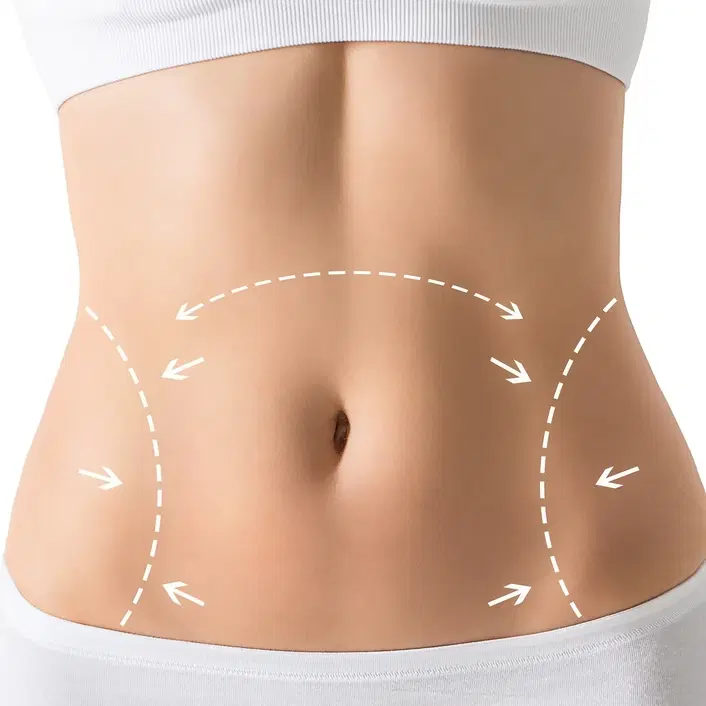
A tummy tuck can make the abdomen appear flatter and more defined, but it achieves that change by removing redundant tissue and reshaping the abdominal contour. It is not an obesity treatment or a procedure designed to produce major weight loss. Significant weight changes after surgery can also alter the result.
This distinction becomes important during consultation. A patient may have reached a comfortable and stable weight yet still have a fold of loose lower-abdominal skin that exercise cannot remove. Another patient may mainly have deeper abdominal fat without much loose skin. These situations are not the same and may require different approaches.
Ideally, body weight should be reasonably stable before surgery. Major planned weight loss is usually better completed first because losing a substantial amount of weight afterward can create new skin laxity and change the carefully created contour.
Who May Be Suitable for a Tummy Tuck?
A suitable candidate generally has excess skin, abdominal wall laxity or a combination of these problems and is healthy enough for elective surgery. The decision is individual because the size of the abdomen alone does not determine whether abdominoplasty is appropriate.
Several factors are usually considered before proceeding:
Loose abdominal skin that remains after pregnancy, ageing or substantial weight change.
A reasonably stable body weight, rather than an active plan for major weight loss.
Abdominal wall laxity or rectus diastasis that contributes to a persistent central bulge.
Good enough general health for major elective surgery and anaesthesia.
Realistic expectations about scars, recovery and the final contour.
An understanding that stretch marks outside the skin being removed may remain.
No uncontrolled medical problem that substantially increases wound-healing or clotting risk.
A willingness to follow restrictions during recovery, including limits on lifting and strenuous activity.
Smoking and nicotine exposure also require particular attention because reduced skin blood flow can interfere with wound healing and increase the risk of tissue problems.
Pregnancy Can Change More Than the Skin
Pregnancy stretches the abdominal wall as well as the skin. After delivery, some people find that the skin and deeper abdominal structures do not completely return to their previous position.
One commonly discussed change is rectus diastasis, where the paired abdominal muscles have moved farther apart as the connective tissue between them has stretched. During a typical full abdominoplasty, the deeper fascial layer can be tightened with sutures to improve abdominal wall contour.
It is sometimes described casually as “sewing the muscles together,” but the surgical concept is more accurately understood as tightening the supporting abdominal wall tissues rather than cutting out loose muscle.
This component can make a meaningful difference when abdominal protrusion is caused partly by wall laxity rather than fat alone.
A Tummy Tuck Cannot Remove Every Stretch Mark
Stretch marks are located within the skin, so abdominoplasty does not erase them throughout the entire abdomen.
If stretch marks are contained within the section of lower abdominal skin that is surgically removed, those particular marks leave with the excised tissue. Marks that remain above or outside the removed area generally remain, although their position can shift when the skin is redraped.
Someone choosing surgery mainly because of stretch marks should therefore have realistic expectations. The operation is primarily intended to improve skin excess, abdominal wall contour and overall shape.
Stretch marks may improve incidentally when affected skin is removed, but they should not be treated as the central indication for a tummy tuck.
Full and Mini Abdominoplasty Solve Different Problems
The term mini tummy tuck is often attractive because it sounds easier, but “mini” does not simply mean the same result through a smaller scar.
A limited abdominoplasty generally treats excess tissue concentrated below the belly button. A full procedure addresses a larger area and may involve wider skin elevation, abdominal wall tightening and repositioning of the skin around the umbilicus.
A patient with substantial skin laxity above and below the belly button is unlikely to obtain the same correction from a limited operation as someone whose concern is confined to a small lower-abdominal fold.
The most appropriate technique should therefore follow the anatomy. Selecting a smaller operation purely to avoid a longer scar can create a compromise if there is more excess tissue than the limited technique can effectively correct.
The Belly Button Is an Important Part of the Result
The navel occupies a small area, yet it can strongly influence whether a tummy tuck looks natural.
During a typical full abdominoplasty, abdominal skin is repositioned while the belly button remains connected to the deeper tissues. An opening is then created in the redraped skin so the umbilicus can appear in an appropriate location.
Its size, shape, depth and surrounding scar all matter aesthetically.
An unnaturally round opening, excessive tension or obvious scarring can draw attention even when the lower abdomen looks flatter. For that reason, photographs of tummy tuck results are worth examining around the belly button as well as along the waist and lower-abdominal scar.
The Scar Is Permanent but Its Appearance Changes
Abdominoplasty requires removal of skin, so a permanent scar is unavoidable.
The main incision is generally positioned low across the abdomen, with its length determined by how much excess skin needs to be removed. A full tummy tuck also commonly produces a scar around the belly button.
Early scars can look red, firm or darker than surrounding skin. Their appearance generally changes during the months that follow, and maturation can continue for a year or longer.
A shorter scar is not always a better scar if it prevents enough loose skin from being removed. The more useful goal is an incision positioned as discreetly as practical while still allowing the surgeon to create the required contour.
Individual healing remains unpredictable, so completely invisible scarring should not be promised.
Liposuction May Be Added for Contour, Not as a Substitute
Tummy tuck and liposuction are frequently performed together, but the two procedures address different tissue problems.
Liposuction removes selected subcutaneous fat. Abdominoplasty removes loose skin and reshapes the abdominal envelope. When appropriate, liposuction can be incorporated to refine areas such as the waist or neighbouring abdominal fat and improve the transition between treated regions.
However, liposuction cannot replace skin removal when substantial laxity is present.
Likewise, adding more liposuction does not automatically create a better waist. The amount and location of fat removal need to be balanced with blood supply, skin quality and the extent of the tummy tuck.
Combining procedures can also alter operative time and risk, so additional surgery should have a clear reason rather than being added simply because a package allows it.
Recovery Requires More Planning Than a Short Holiday
Abdominoplasty is a significant abdominal operation, and early recovery affects normal movement.
Swelling, bruising, tightness and discomfort are expected initially. Some patients find themselves walking slightly bent forward during the early period because standing fully upright places tension across the lower abdomen. Temporary numbness can also occur.
Drains may be used depending on surgical technique, although not every approach requires them. Compression or abdominal-support garments may also form part of postoperative care.
Many patients require several weeks before returning comfortably to their usual routine, and strenuous activity is generally restricted longer. One current clinical overview notes that return to work may be possible around two to four weeks for many patients, depending heavily on the physical demands of the job.
Recovery should therefore be planned around the actual operation rather than an advertised number of nights in a hotel.
Early Walking Has a Medical Purpose
Patients are commonly encouraged to begin gentle walking relatively early after an abdominoplasty when medically appropriate. This is not exercise in the usual sense. It is part of postoperative recovery.
Movement supports circulation and helps reduce problems associated with prolonged immobility. Abdominoplasty deserves particular attention to venous thromboembolism, the term covering deep-vein thrombosis and pulmonary embolism. Research has consistently identified clot prevention and individual risk assessment as important considerations in abdominal cosmetic surgery.
Risk is not identical for every patient. Previous blood clots, obesity, hormone use, prolonged surgery, combined procedures and other health factors can change the prevention strategy.
The appropriate plan may involve early mobilization, mechanical measures or medication depending on individual risk. Patients should not begin or stop anticoagulant medication on their own.
Flying Home Needs to Be Part of the Surgical Plan
Medical tourists face a recovery issue that local patients may not: sitting on an aircraft shortly after abdominal surgery.
Both major surgery and prolonged immobility can increase blood-clot risk. General cosmetic-surgery travel guidance advises avoiding flying for approximately seven to ten days after a tummy tuck, but this is a broad minimum recommendation rather than personal medical clearance.
Some patients may need to remain near their surgical team longer because of the extent of surgery, drain management, mobility, medical history or a postoperative problem.
A flight date should therefore not be chosen solely because a package ends on a particular morning.
Before travelling, the patient should be reviewed, able to move safely and given individualized advice for the journey. Shortening the stay by one or two days has little value if it removes the opportunity to identify an early complication before an international flight.
Weight Stability Helps Protect the Result
A tummy tuck can create a long-lasting improvement, but the abdomen continues responding to changes in body weight.
Substantial weight gain can stretch the skin and abdominal wall again. Significant weight loss after surgery can produce renewed laxity. Maintaining a reasonably stable weight therefore helps preserve the contour created during surgery.
This is another reason abdominoplasty should not be scheduled as an incentive to begin weight loss afterward.
Patients who are still actively losing a significant amount of weight are generally better served by allowing their body to stabilize before final body-contouring decisions are made.
The objective is to operate on a relatively settled anatomy rather than trying to predict where the patient's weight will eventually end up.
Future Pregnancy Does Not Automatically Become Impossible
Having an abdominoplasty does not mean a future pregnancy cannot occur.
The larger concern is what pregnancy may do to the surgical result. The abdominal skin and wall can stretch again, potentially recreating laxity or changing the contour. For that reason, patients who know they plan another pregnancy are often advised to consider postponing elective abdominoplasty until afterward.
That recommendation is mainly about surgical planning and durability rather than claiming that pregnancy after a tummy tuck is universally prohibited.
Life circumstances change, and an unexpected future pregnancy does not automatically mean a medical catastrophe. The individual situation should be discussed with the relevant medical teams.
Possible Complications Go Beyond a Visible Scar
The lower-abdominal scar is predictable, but it is not the only issue that belongs in informed consent.
Seroma, which is a collection of fluid beneath the skin, is a recognized complication. Poor wound healing, infection, bleeding, haematoma, persistent sensory changes and areas of tissue damage can also occur.
Cosmetic concerns can include residual skin excess, contour irregularity, asymmetry, visible scar widening or small folds at the ends of the incision.
Blood clots and pulmonary embolism are less common but potentially serious complications.
Increasing pain, unexpected shortness of breath, chest pain, significant one-sided leg swelling, fever, worsening wound changes or rapidly increasing abdominal swelling should not simply be attributed to routine recovery. These symptoms require prompt medical assessment.
What Should You Check Before Abdominoplasty in Turkey?
Travelling abroad for surgery makes continuity of care especially important. Turkey maintains current authorization records for healthcare providers permitted to operate within international health tourism; the latest provider page available in August 2026 is dated July 28, 2026.
Before booking abdominoplasty in Turkey, it is sensible to clarify:
Who will personally perform the operation and who is medically responsible during the postoperative period.
Whether the healthcare provider currently holds the appropriate authorization for international health-tourism patients.
Which type of abdominoplasty is being proposed and why it matches your degree of skin and abdominal wall laxity.
Whether abdominal wall tightening and liposuction are included, rather than assuming every tummy tuck package contains the same steps.
How your individual blood-clot risk will be assessed and what prevention plan is recommended.
How long you should remain in Turkey before flying home, based on your actual recovery rather than a standard travel package.
Who manages complications after you return home and how urgent concerns are escalated.
What the quotation includes, including anaesthesia, facility fees, garments, medication, postoperative examinations and any expected additional costs.
Checking authorization is useful, but it does not replace evaluating surgical qualifications, the proposed medical plan and the quality of follow-up.
Abdominoplasty Cost in Turkey Depends on Surgical Scope
There is no universal abdominoplasty cost in Turkey because the term covers operations of different complexity.
A mini tummy tuck does not involve the same surgical work as a full abdominoplasty with extensive skin removal, abdominal wall plication and additional liposuction. Anaesthesia, hospital care, operating time, postoperative monitoring and accommodation can also change the quotation.
This is why comparing two packages by price alone can be misleading.
Patients should first compare what is actually being proposed. Does the quotation include liposuction? Is an overnight hospital stay included? How many postoperative examinations are planned? Are medications and compression garments separate expenses?
An unusually inexpensive package is not necessarily poor, and a high price is not automatically a sign of superior surgery. The treatment plan needs to make medical and anatomical sense before cost becomes a useful comparison.
A Flatter Abdomen Is Only Part of a Successful Result
Abdominoplasty in Turkey can provide a significant change for appropriately selected patients with loose abdominal skin, abdominal wall laxity or post-weight-loss tissue excess. It can remove redundant tissue, improve the lower-abdominal contour and tighten the deeper abdominal wall when necessary.
What it cannot do is replace weight loss, guarantee removal of every stretch mark or prevent the body from changing again after pregnancy, ageing or major weight fluctuation.
The operation also requires acceptance of a permanent scar and a meaningful recovery period. Blood-clot prevention, early mobility, wound monitoring and safe travel timing are particularly relevant for international patients.
For anyone considering a tummy tuck in Turkey, the best consultation should therefore answer more than “How flat can my stomach become?” It should explain why the abdomen looks the way it does, which tissues need correction, where the scar will sit, what risks apply personally and how postoperative care will continue after the flight home.
A good result is not simply an abdomen that looks tighter in an early photograph. It is a proportionate contour achieved without unnecessary tissue removal, supported by safe recovery and a plan that still makes sense once swelling has disappeared.
Note: This article is intended for general information and does not replace an individual surgical assessment. Suitability for abdominoplasty, abdominal wall repair, liposuction, anaesthesia, clot prevention, travel timing and postoperative care should be determined after a personal examination and review of medical history.