
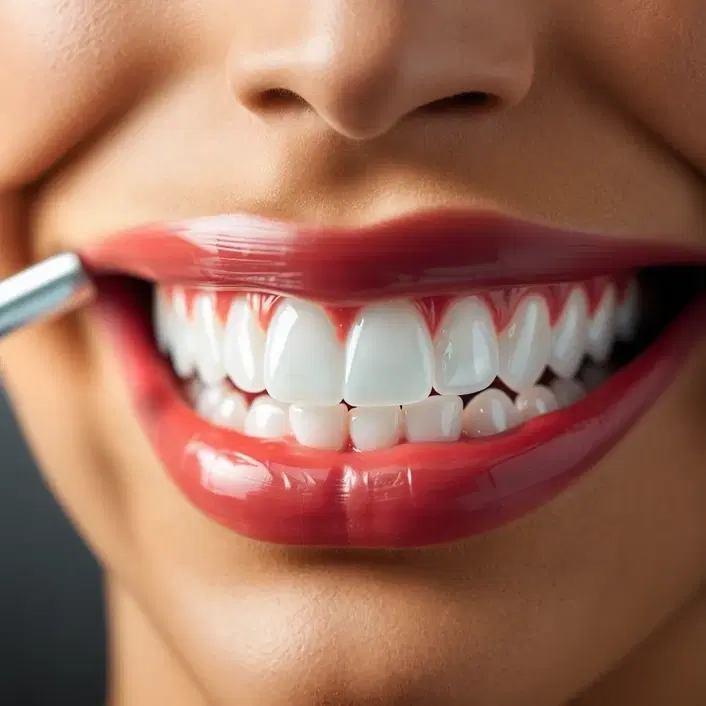
What Are Dental Veneers?
Dental veneers are individually designed shells bonded to the visible surfaces of teeth. Their purpose is mainly cosmetic, although they may also restore minor areas of lost tooth structure.
They can change the apparent width, length, shape and colour of a tooth. For example, veneers may help create a more uniform appearance when a front tooth is slightly shorter than its neighbour or when permanent discoloration does not respond adequately to whitening.
Ceramic veneers are commonly chosen because they can imitate the colour and optical characteristics of natural enamel while providing good long-term performance when treatment is correctly planned. Current long-term evidence reports survival above 90% over extended follow-up periods for several ceramic veneer systems, although individual results vary.
A veneer is still a dental restoration, however. It should not be treated as a cosmetic accessory that can be placed without considering the health and structure of the natural tooth underneath.
Who May Be Suitable for Veneers?
Veneers can work particularly well when the main concerns affect the visible surfaces of otherwise maintainable teeth. Before recommending treatment, the dentist should assess the teeth, gums, existing restorations, bite and amount of healthy enamel available for bonding.
Situations in which veneers may be considered include:
Persistent discoloration that cannot be improved sufficiently with appropriate whitening.
Small chips or areas of surface wear affecting front teeth.
Uneven tooth proportions where a tooth appears slightly too short, narrow or irregular.
Small spaces between selected teeth that can reasonably be corrected without orthodontic treatment.
Minor aesthetic alignment concerns where restorative treatment will not create unnecessary tooth reduction.
Older veneers or restorations requiring replacement after individual assessment.
Teeth with enough healthy enamel remaining to support predictable adhesive treatment.
Patients with realistic expectations about maintenance, colour, symmetry and the possibility of future replacement.
Veneers are not automatically suitable simply because someone wants straighter or whiter teeth. Active decay, unhealthy gums, significant loss of tooth structure or severe bite problems can change the treatment plan considerably.
Preserving Enamel Is One of the Most Important Details
One of the most important principles in veneer treatment is preserving healthy natural tooth structure whenever possible.
Modern evidence consistently shows that ceramic veneers bonded predominantly to enamel have better survival and fewer complications than veneers relying heavily on bonding to exposed dentin. A 2025 analysis found significantly better outcomes when enamel was preserved, reinforcing the importance of conservative tooth preparation.
This does not mean every veneer can be placed without preparation. Teeth that are rotated, significantly protruding or heavily restored may require different amounts of adjustment.
The important point is that preparation should have a reason.
If substantial healthy tooth tissue needs to be removed simply to create a fashionable shape, patients should understand the long-term implications before agreeing to treatment. Once enamel has been removed, it does not grow back.
No-Prep Veneers Are Not Suitable for Every Smile
The phrase no-prep veneers can sound appealing because it suggests that natural teeth will remain completely untouched.
In selected cases, minimal-preparation or no-preparation veneers can indeed be possible. This is more likely when teeth are naturally small, positioned slightly inward or need additional volume rather than reduction.
Placing additional ceramic onto a tooth that is already prominent, however, can make the final result look bulky. The gum transition may also become harder to manage if the restoration creates unnecessary thickness.
A conservative treatment does not necessarily mean “zero preparation.” It means removing no more tooth structure than is clinically needed to achieve the intended shape, strength and fit.
That distinction is far more meaningful than a marketing label.
Veneers and Crowns Are Not Interchangeable
Patients travelling for cosmetic dentistry sometimes use the words veneer and crown as though they describe the same restoration. They do not.
A veneer primarily covers the front surface of the tooth. A crown surrounds substantially more of the tooth and generally requires more extensive preparation.
Crowns have an important role when teeth are heavily damaged, structurally compromised or already extensively restored. Veneers can be a more conservative option when the primary problem is aesthetic and the tooth remains largely healthy.
This difference matters enormously when someone is planning treatment on ten, sixteen or twenty visible teeth.
A written treatment plan should clearly identify which restorations are veneers and which are full crowns. The distinction should never be hidden behind broader phrases such as “smile makeover” or “Hollywood Smile.”
Ceramic Choice Can Change the Appearance
Not every veneer is made from exactly the same ceramic.
Different materials have different levels of translucency, strength and laboratory handling. Feldspathic porcelain and lithium-disilicate-based ceramics are among the materials used for laminate veneers, and long-term research has reported strong survival for several established ceramic systems.
Material choice should take into account what lies beneath the veneer.
A naturally light tooth needing a small shape correction may allow greater translucency. A dark tooth may need a different ceramic thickness or optical strategy so the underlying colour does not show through.
This is why choosing veneers from a shade photograph alone is not enough. The natural tooth colour, veneer thickness, cement shade and ceramic properties work together to create the final appearance.
The Whitest Veneer Is Not Always the Most Natural
Bright teeth can look attractive, but colour should fit the rest of the face.
Natural enamel contains variations in translucency and brightness rather than appearing as a single solid block of white. Surface texture, edge translucency and the gradual change in colour from the gum toward the biting edge all contribute to a believable result.
Some patients deliberately prefer a noticeably bright cosmetic smile, while others want people to be unable to tell that any dental work has been completed.
Neither preference is inherently correct.
The important part is agreeing on the intended style before the final restorations are manufactured. A patient expecting subtle ivory-toned veneers can be disappointed by an opaque ultra-white result even if the restorations are technically well made.
Your Bite Matters More Than It Seems
Veneers do not function only when someone smiles for a photograph. They also contact other teeth during chewing and jaw movement.
A poorly balanced bite can place excessive stress on ceramic restorations. Grinding and clenching may also increase the risk of fracture or debonding in some patients.
Fracture and loss of bonding are among the more frequently reported mechanical complications of ceramic veneers. Long-term reviews show that veneers generally perform well, but these problems remain important causes of failure.
For someone with significant tooth grinding, treating the bite and protecting the restorations may therefore be part of the long-term plan.
Cosmetic dentistry should never ignore function simply because the front teeth are being treated.
What Happens During Veneer Treatment?
The first stage should involve examining the teeth and gums and discussing the desired appearance. Photographs, scans or impressions may be used to evaluate tooth proportions and design the planned restorations.
If preparation is required, a controlled amount of tooth structure is removed to create space for the ceramic. Digital scanning or conventional impressions can then record the prepared teeth for laboratory production.
Temporary restorations may be used when the preparation requires them.
The final veneers are evaluated before bonding. Shape, colour, tooth-to-tooth contact and relationship with the gums should all be checked. The teeth and ceramic surfaces are then prepared according to the selected adhesive protocol, and the veneers are bonded into position.
The quality of bonding is important because ceramic veneers depend heavily on adhesive retention. Enamel preservation, correct surface treatment and careful control of contamination can all influence clinical success.
Temporary Sensitivity Can Occur
Some patients notice temporary sensitivity after tooth preparation or veneer bonding.
The degree of sensitivity can vary depending on how much tooth structure has been prepared, the condition of the original teeth and individual response.
Mild temporary sensitivity does not necessarily indicate a problem. Persistent pain, increasing sensitivity, spontaneous toothache or discomfort when biting should be assessed rather than simply ignored.
A veneer can improve the external appearance of a tooth, but it cannot protect an unhealthy pulp from every future problem.
This is why symptoms and existing restorations should be evaluated before cosmetic preparation begins.
Veneers Do Not Automatically Require Root Canal Treatment
Healthy teeth do not routinely need root canal treatment simply because veneers are being fitted.
Root canal therapy is used when the pulp inside a tooth is damaged or diseased enough to require endodontic treatment. Preparing a tooth for a veneer does not automatically create that indication.
This is another reason conservative preparation matters. Removing excessive tooth structure can increase the biological burden placed on the natural tooth.
If a treatment proposal includes root canal treatment for several apparently healthy teeth, patients should understand the clinical reason for each one rather than assuming it is a normal stage of veneer treatment.
How Long Can Veneers Last?
Veneers are long-term restorations, but they should not be described as permanent in the sense that they will never require attention or replacement.
Current systematic evidence reports long-term ceramic veneer survival commonly above 90%, with certain material groups showing survival around the mid-90% range over extended follow-up. Enamel preservation is repeatedly associated with better outcomes.
Individual longevity can still vary substantially.
A patient with excellent oral hygiene, healthy gums, preserved enamel and a stable bite has a different risk profile from someone who grinds heavily, develops recurrent decay or has veneers bonded mainly to dentin.
The better way to think about veneers is as durable restorations that still require maintenance.
What Problems Can Develop With Veneers?
Ceramic veneers have a strong clinical record, but complications remain possible. Understanding them before treatment gives a much more realistic picture than focusing only on ideal before-and-after photographs.
Possible issues include:
Ceramic fracture or chipping, particularly when restorations experience excessive forces.
Debonding, where a veneer partially or completely separates from the tooth.
Colour mismatch or aesthetic dissatisfaction if shade and translucency do not meet expectations.
Gum irritation when restoration contours or margins make cleaning difficult.
Tooth sensitivity following preparation or bonding.
Decay at vulnerable tooth margins if plaque control becomes inadequate.
Need for root canal treatment in a small proportion of teeth if the pulp later becomes irreversibly damaged.
Replacement of the veneer in the future because restorations are not expected to remain unchanged forever.
Fracture and debonding are repeatedly identified among the most important mechanical causes of veneer failure.
Healthy Gums Help Veneers Look Better
Gum health is essential in cosmetic dentistry because the gumline forms the frame around every front tooth.
Inflamed or bleeding gums can make even excellent ceramic work appear less attractive. Gum recession later may also expose parts of the tooth or restoration margin that were originally hidden.
Before veneers are placed, active gum disease should therefore be controlled. Daily cleaning remains important afterward because veneers do not protect the gum tissue from plaque-related inflammation.
A beautiful smile is not simply a set of well-shaped ceramics. The restorations need to meet healthy gum tissue in a way that can be cleaned comfortably.
Whitening Should Be Discussed Before Choosing the Final Shade
Natural teeth can usually be lightened with appropriate whitening procedures, but ceramic veneers do not whiten in the same way once they have been manufactured.
This becomes particularly important when only six or eight teeth receive veneers and the remaining teeth stay natural.
If whitening is planned, it is usually worth discussing the order of treatment before the final ceramic shade is chosen. Otherwise, whitening the natural teeth later could create a new colour difference.
The same principle applies when existing crowns or fillings are visible near the veneers. They may not respond to whitening either.
Smile design works best when the whole visible area is considered rather than treating one group of teeth in isolation.
Veneers in Turkey Cost Depends on the Treatment Plan
There is no single meaningful veneers in Turkey cost.
The final price can depend on the number of teeth treated, ceramic type, laboratory process, complexity of preparation and whether other dental treatment is required before veneers can be placed.
One patient may need four veneers and whitening. Another may require treatment of gum disease and replacement of old restorations before receiving ten ceramic veneers.
A price quoted “per tooth” therefore tells only part of the story.
Patients should ask for a written plan showing which teeth are being treated, which restorations are veneers and whether any additional procedures are included.
What Should International Patients Verify Before Treatment?
Travelling for veneers means that long-term follow-up may eventually take place in another country. Turkey currently maintains an authorization system for healthcare providers involved in international health tourism, and the current provider information was updated on July 28, 2026.
Beyond current provider status, patients should understand who performs the tooth preparation, who approves the final veneer design and how adjustments will be handled. The treatment plan should clearly distinguish veneers from crowns and identify how much tooth reduction is expected.
Patients should also ask for treatment records before leaving. If a veneer later fractures or becomes loose, knowing the ceramic type and which teeth were treated can make follow-up with another dentist much easier.
The shortest travel schedule is not automatically the best schedule. Enough time should be allowed to assess the fit, appearance and bite before the patient flies home.
Veneers Should Improve a Smile Without Sacrificing Healthy Teeth Unnecessarily
Veneers in Turkey can offer a predictable cosmetic option for appropriately selected patients who want to improve tooth colour, proportion, shape or small aesthetic irregularities.
Their greatest advantage is not simply that ceramic can create attractive white teeth. Properly planned veneers can achieve a significant visual change while preserving considerably more natural tooth structure than a full crown in suitable cases.
That conservative approach has long-term importance. Current evidence repeatedly shows stronger veneer survival when healthy enamel is preserved for bonding.
A natural result also depends on more than selecting a bright shade. Tooth proportions, translucency, gum health and the way the upper and lower teeth meet all affect the finished smile.
For patients considering dental veneers in Turkey, the most useful questions are therefore not simply “How many veneers can I get?” or “How quickly can the treatment be finished?” A better treatment plan explains why each tooth needs a veneer, how much enamel will be preserved, what material will be used and how the restorations will be maintained after returning home.
Veneers can last for many years, but they remain dental restorations and may eventually require repair or replacement. Choosing a conservative design today helps preserve more options for the natural teeth in the future.
Note: This article is intended for general information and does not replace an individual dental examination. Suitability for veneers, tooth preparation, ceramic selection, whitening and alternative treatments should be determined after clinical assessment of the teeth, gums and bite.