
What Is Root Canal Treatment?
Inside every tooth is a space containing the pulp, a soft tissue made up of nerves, blood vessels and connective tissue. If bacteria reach this area through deep decay, cracks, trauma or another pathway, the pulp can become inflamed or infected. Untreated infection may eventually lead to pain, swelling or an abscess.
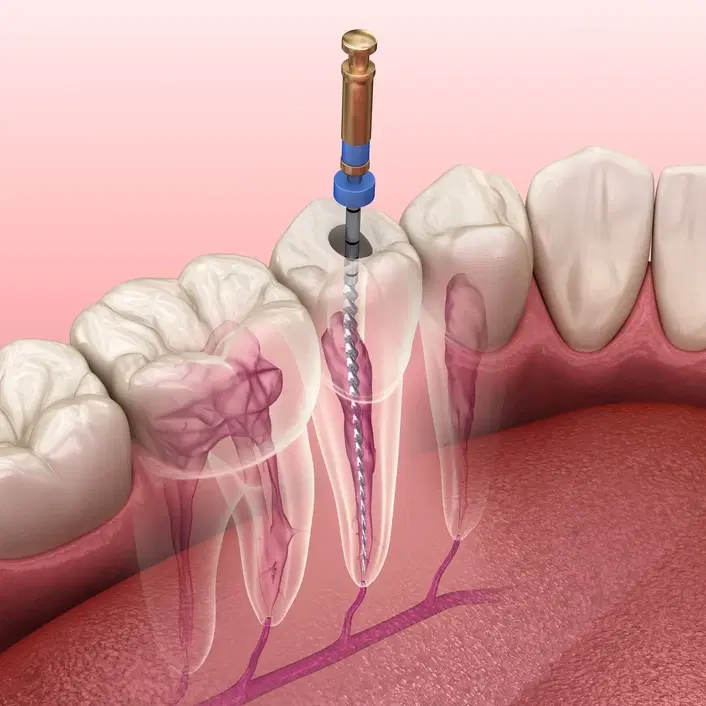
Root canal treatment removes the diseased pulp through an opening created in the tooth. The internal canal spaces are then cleaned, disinfected, shaped and filled before the tooth is sealed.
The tooth does not need the pulp in order to remain in the mouth after development is complete. Once appropriately treated and restored, it can continue to function during biting and chewing.
This is why root canal treatment is often considered a tooth-preserving procedure rather than simply a way to stop toothache.
Who May Need a Root Canal?
A painful tooth does not automatically require root canal treatment, and a tooth that needs treatment does not always produce severe pain. Diagnosis usually involves the patient's symptoms, clinical examination, sensitivity tests and dental imaging.
Signs and situations that may lead to investigation for root canal treatment include:
Persistent pain when biting or chewing, particularly when symptoms cannot be explained by a temporary irritation.
Lingering sensitivity to hot or cold that continues after the temperature stimulus has been removed.
Deep tooth decay that has reached or significantly affected the pulp.
A cracked or fractured tooth that allows bacteria to reach the internal tissues.
Swelling or tenderness around the tooth, sometimes accompanied by a small pimple-like area on the gum.
A previous large filling or dental procedure followed by irreversible pulp inflammation or infection.
Dental trauma, which can damage the pulp even when the tooth does not appear obviously broken.
Changes around the root visible on dental imaging that suggest infection or inflammation requiring endodontic assessment.
Symptoms alone cannot confirm the diagnosis. A tooth can occasionally have significant pulp damage without producing obvious pain, which is why examination is important before treatment begins.
Severe Toothache Is Often the Symptom, Not the Treatment
Root canals have a reputation for being painful, but the severe pain people associate with them often comes from the inflamed or infected tooth before treatment.
Local anaesthesia is normally used during root canal therapy so the tooth and surrounding area are numb. The purpose of treatment is to remove the source of inflammation or infection and relieve the dental pain rather than create it.
After the anaesthetic wears off, the tooth can feel tender for a period, especially if significant inflammation was present beforehand. Mild soreness around the treated area usually settles progressively.
A modern root canal should therefore not be approached with the assumption that extreme pain is an unavoidable part of the procedure.
Diagnosis Determines Whether the Tooth Can Be Saved
Before treatment begins, the dentist needs to establish both the condition of the pulp and the overall prognosis of the tooth.
Root canal treatment is useful only if the remaining tooth can ultimately be restored. If a tooth has an extensive fracture extending unfavourably beneath the gum or root, severe loss of supporting tissue or another problem that prevents predictable restoration, simply cleaning the canals may not solve the larger issue.
The surrounding bone and gums therefore matter alongside the internal infection.
This distinction is particularly important for international patients who may arrive expecting to complete several treatments within a short trip. A responsible treatment plan can change after clinical examination and imaging reveal what is happening beneath existing fillings or crowns.
Saving the natural tooth is valuable when the tooth is maintainable, but treatment should still have a realistic long-term purpose.
How Is a Root Canal Performed?
Treatment usually begins with local anaesthesia and isolation of the tooth. An opening is made through the upper part of the tooth so the dentist can reach the pulp chamber and root canals.
The inflamed or infected pulp is removed, and very small instruments are used to clean and shape the canals. The internal spaces are disinfected and then filled with a material designed to seal the root canal system. Finally, the access opening is restored temporarily or permanently depending on the treatment plan.
A straightforward case may be completed efficiently, while teeth with multiple roots, curved canals, previous treatment or complicated anatomy can require more time.
Treatment may also be divided across appointments. In some cases, a temporary filling is placed between visits before the final restoration is completed.
The number of appointments should therefore be determined by the tooth rather than by a standard travel package.
Front Teeth and Molars Are Not Equally Complex
Different teeth have different internal anatomy.
A front tooth may have a relatively simple root canal system, while molars can contain several roots and multiple canals. Curved, narrow or difficult-to-locate canals can make treatment more technically demanding.
Previous dental work can add another level of complexity. A tooth that has already received root canal treatment may contain existing filling materials, posts, crowns or altered anatomy that need to be considered during retreatment.
This is why two root canal treatments should not automatically be expected to take the same amount of time or cost the same amount.
The complexity lies largely beneath the visible part of the tooth.
A Crown May Be Needed After Root Canal Treatment
Finishing the canals does not always finish the treatment of the tooth.
Once the root canal has been completed, the tooth still requires an appropriate final restoration to protect it against leakage and chewing forces. A filling may be enough in selected cases, while a crown is often considered when substantial tooth structure has been lost or when the tooth has been significantly weakened.
Back teeth frequently experience strong chewing forces, making the quality of the final restoration especially important.
A root canal can be technically successful yet still face future problems if the remaining tooth fractures or if the restoration fails to provide an adequate seal.
For dental tourists, the treatment plan should therefore make clear whether the quoted price includes only the endodontic procedure or also the final crown or other restoration.
Temporary Fillings Need to Be Treated With Care
When treatment requires more than one appointment, a temporary filling may be placed to close the access opening between visits.
Temporary restorations are not intended to perform indefinitely like a definitive crown or filling. Patients should be sensible with the treated tooth and follow the individual eating and cleaning instructions provided.
If a temporary restoration comes out completely, the dental team should be contacted because the internal treatment needs to remain protected.
This is particularly relevant when appointments are scheduled around travel. Leaving a tooth with a temporary restoration for longer than planned simply because a return flight has already been booked may complicate treatment.
Antibiotics Do Not Replace Root Canal Treatment
Dental infection sometimes leads patients to expect antibiotics as the main treatment.
When infection originates from diseased pulp inside a tooth, the source usually needs to be addressed through dental treatment. An abscess will not simply resolve permanently because pain temporarily improves or medication reduces symptoms.
Antibiotics may be appropriate in selected situations depending on the presence and spread of infection and the patient's health, but they do not physically clean infected root canals.
Patients should also avoid using leftover antibiotics or obtaining them independently without professional assessment.
The dental procedure and any medication should each have a clear clinical reason.
Recovery Is Usually Manageable
The mouth can remain numb for several hours after treatment because of local anaesthesia. During this period, care is needed to avoid accidentally biting the cheek, lip or tongue.
Once feeling returns, some tenderness around the treated tooth can be normal. The surrounding tissues may have been inflamed before treatment, and the tooth can feel different when biting during the early recovery period.
The discomfort should generally improve rather than become progressively worse.
Severe pain or pressure lasting more than a few days, visible swelling, return of the original symptoms or a bite that suddenly feels very uneven deserves reassessment.
Patients travelling home shortly after treatment should know exactly whom to contact if these symptoms develop.
A Dental Abscess Should Not Be Ignored
An abscess is a collection of pus caused by infection and needs professional dental treatment. It does not reliably disappear on its own.
Symptoms may include severe toothache, swelling, tenderness or an unpleasant taste. More extensive infection can occasionally cause facial swelling or systemic illness.
A painful tooth that suddenly stops hurting also does not necessarily mean the problem has resolved. Loss of nerve vitality can sometimes reduce pain even while infection remains around the root.
This is why delaying assessment because symptoms temporarily improve can be misleading.
Root canal treatment may be one way to preserve an infected tooth when its condition is suitable; extraction may be necessary in other situations.
Can a Root Canal Fail?
Root canal treatment has a strong overall success record, but no dental procedure can guarantee that every tooth will heal permanently.
A previously treated tooth can develop symptoms months or even years later. Reasons can include complex anatomy that was not adequately treated, new decay, leakage through a restoration, fracture or a new route for bacteria to enter the tooth. Retreatment may allow the tooth to be saved by reopening it, removing previous canal-filling materials, cleaning the canals again and resealing them.
If conventional retreatment is not appropriate or does not resolve infection, additional endodontic surgery may sometimes be considered.
The possibility of retreatment does not mean the original procedure was automatically unsuccessful from the beginning. Teeth and restorations can develop new problems over time.
Root Canal Treated Teeth Can Remain Functional for Years
Long-term outcomes depend on far more than the root canal filling itself.
Large studies have reported high tooth survival after endodontic treatment, including survival rates above 90% in many studied groups. Appropriate final restoration and continued dental care are important contributors to maintaining treated teeth.
This is why claims such as “a root canal lasts exactly ten years” are misleading.
Some treated teeth function for decades, while others experience earlier complications. Initial tooth condition, remaining structure, periodontal support, restoration quality and later oral health all influence longevity.
The aim should be to preserve a useful natural tooth for as long as reasonably possible.
Cleaning Does Not Stop Because the Nerve Has Been Removed
A root canal treated tooth can no longer develop the same pulp symptoms once the internal tissue has been removed, but the tooth is not immune to dental disease.
Decay can still occur around its filling or crown. Gum disease can still affect the tissues supporting it. The restoration can also wear, fracture or become loose.
Regular brushing with fluoride toothpaste, cleaning between the teeth and routine dental examinations therefore remain important after treatment. Final crowns also require the same basic daily oral hygiene as other teeth.
A root canal saves the tooth; it does not make the tooth maintenance-free.
Root Canal Cost in Turkey Depends on the Tooth and Restoration
There is no meaningful single root canal cost in Turkey because treatment complexity varies.
A front tooth with relatively simple anatomy can require a different amount of clinical work from a molar with several canals. Retreatment of a tooth that already contains a crown, post or previous root filling can also be considerably more involved.
The final restoration affects total cost as well. A quotation covering root canal therapy alone is not equivalent to a treatment plan that also includes a permanent crown.
Additional imaging, rebuilding lost tooth structure or treating another dental problem may also influence the final amount.
For this reason, international patients should compare complete written treatment plans rather than a single advertised root canal price.
What Should You Check Before Root Canal Treatment in Turkey?
Dental tourism makes follow-up particularly important because the patient may be in another country when the tooth completes its healing period. Healthcare providers operating within international health tourism in Turkey are required to hold the relevant authorization, and current authorized-provider records can be checked before treatment.
Before booking treatment, it is useful to clarify:
Why the tooth needs root canal treatment and what findings support the diagnosis.
Whether the tooth can be predictably restored afterward, rather than treating the canals without considering the remaining structure.
Who will perform the treatment and whether a more complex case requires additional endodontic expertise.
How many appointments are expected and whether the final restoration can realistically be completed during the same trip.
Whether the quoted price includes the final filling or crown, or whether these are separate procedures.
What happens if pain or infection returns after you travel home, including how treatment records will be shared with a local dentist.
Whether the healthcare provider currently holds the appropriate authorization for international health-tourism patients.
Which records you will receive before leaving Turkey, including dental images and a summary of the treatment completed.
A fast appointment schedule can be convenient, but it should not replace correct diagnosis or adequate time for restorative treatment.
Saving the Natural Tooth Is Often the Central Goal
When root canal treatment and extraction are both mentioned, some patients assume that removing the tooth is always the simpler option.
Extraction removes the infected tooth but also creates a missing-tooth space. Depending on its location, replacement may later involve an implant, bridge or another prosthetic solution.
Root canal treatment attempts to preserve the natural tooth when its structure and supporting tissues offer a reasonable prognosis.
That does not mean every tooth should be saved at all costs. Teeth with severe structural damage or an unfavourable fracture may not be suitable candidates.
The most useful decision is therefore based on prognosis rather than on a blanket rule that extraction or root canal therapy is always better.
Successful Root Canal Treatment Is More Than Pain Relief
Root canal treatment in Turkey can help preserve a natural tooth affected by significant pulp inflammation or infection. The procedure removes the damaged internal tissue, cleans and shapes the canal system and seals the space before the tooth receives an appropriate final restoration.
Pain relief is an important benefit, but it is not the only measure of success. The tooth needs to remain sealed, structurally protected and surrounded by healthy gums and bone.
A crown or another definitive restoration may therefore be an essential part of the overall treatment rather than an optional cosmetic addition.
For international patients considering a root canal in Turkey, treatment planning should also extend beyond the dental trip itself. Diagnosis, the number of appointments, the final restoration, treatment records and a clear follow-up plan should all be understood before work begins.
A well-treated tooth can remain functional for many years, but no responsible treatment should promise permanent success. The strongest outcome comes from correct diagnosis, careful root canal cleaning and sealing, a durable final restoration and continued oral care long after the flight home.
Note: This article is intended for general information and does not replace an individual dental examination. The need for root canal treatment, tooth prognosis, number of appointments, final restoration and follow-up should be determined after clinical and radiographic assessment.