
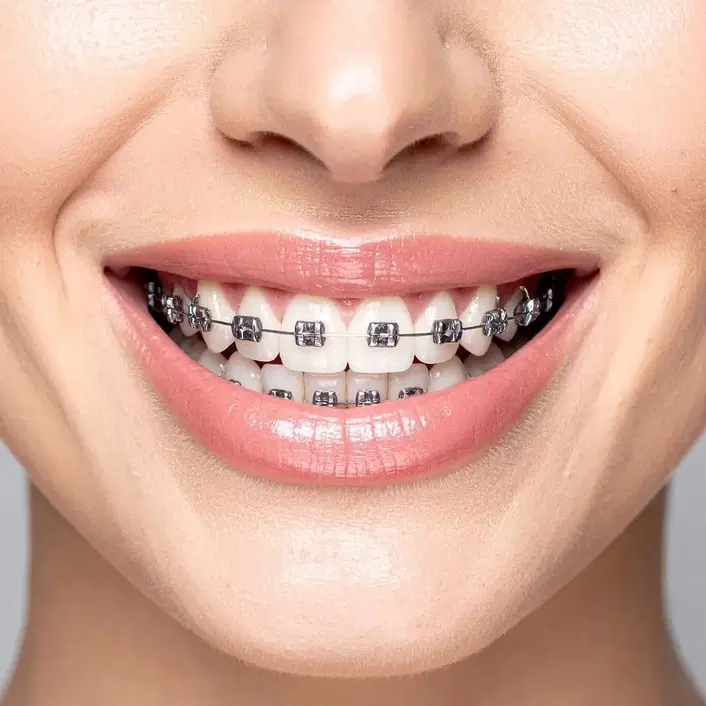
Braces Move Teeth Gradually Rather Than Simply Making Them Look Straighter
Orthodontic treatment works by applying controlled forces to the teeth over time. Brackets provide attachment points, while the archwire helps guide teeth toward their planned positions. The surrounding bone and supporting tissues gradually adapt as this movement takes place.
The purpose can extend beyond creating a straighter smile. Orthodontic treatment may also address crowding, spaces between teeth and different bite relationships. In some patients, improving the way teeth meet can be just as important as changing how they appear from the front.
This is why treatment should not begin by simply deciding which teeth look crooked. The entire bite needs to be evaluated. Moving one tooth changes its relationship with neighbouring and opposing teeth, so orthodontic planning considers the dental arches as a whole.
Who May Need Braces?
Braces can be used for children, teenagers and adults, although the treatment plan varies according to dental development, jaw relationships and the complexity of the problem. Age alone does not determine whether fixed orthodontic treatment is possible; healthy teeth and gums and an appropriate diagnosis matter more.
Common reasons for considering braces include:
Crowded teeth that overlap or do not have enough space to align normally.
Noticeable gaps between teeth that the patient wants to close.
Rotated or displaced teeth that have erupted outside the desired position.
Overbite, underbite or crossbite problems that affect how the upper and lower teeth meet.
Teeth that are difficult to clean effectively because of significant crowding or irregular positioning.
Aesthetic concerns about dental alignment where orthodontic movement is more appropriate than disguising the problem with extensive restorative work.
Relapse after previous orthodontic treatment when teeth have moved again after retention was discontinued or failed.
More complex bite problems that require fixed braces as part of a broader orthodontic or, in selected cases, combined surgical plan.
The important point is that braces should follow diagnosis. Two people with similar-looking front teeth may have completely different bite relationships and therefore need different treatment.
Healthy Teeth and Gums Come Before Bracket Placement
Braces create additional areas around brackets and wires where food and plaque can collect. Beginning treatment while active decay or significant gum inflammation is already present can make oral hygiene more difficult.
A dental examination and appropriate cleaning are therefore useful before fixed appliances are fitted. Routine dental care should also continue during orthodontic treatment rather than assuming orthodontic appointments replace normal dental examinations.
If cavities, gum disease or another dental problem is identified, it may need to be treated before the orthodontic plan begins.
This is especially relevant for adults considering braces in Turkey, because previous crowns, implants, missing teeth or large fillings may need to be incorporated into the final bite plan.
Metal Braces Remain a Precise and Widely Used Option
Traditional fixed braces generally use metal brackets bonded to the teeth with an archwire passing through them. They remain a common treatment because they can provide precise control over tooth movement in a wide range of orthodontic situations.
Their main cosmetic disadvantage is visibility. Brackets and wires can easily be seen when smiling.
For many patients, however, this is a temporary concern compared with the long-term objective of correcting tooth position and bite. Modern fixed appliances are considerably smaller than the large brackets many people associate with older orthodontic treatment.
The most suitable appliance should therefore be chosen according to the orthodontic problem and patient preference rather than assuming that the least visible option is automatically the best one.
Ceramic Braces Offer a More Discreet Appearance
Ceramic braces follow the same broad fixed-appliance principle but use tooth-coloured or relatively translucent brackets to make the braces less noticeable. They can be particularly attractive to adults who want fixed orthodontic control without the appearance of conventional silver brackets.
They are still fixed braces. Food can become trapped around them, cleaning remains important and regular orthodontic monitoring is necessary.
Ceramic brackets are therefore not an invisible version of treatment. They simply reduce the visual contrast between the appliance and the teeth.
The orthodontic team may also recommend metal brackets in certain situations where they better suit the planned mechanics. Aesthetic preference is important, but it is one of several factors involved in appliance selection.
Braces and Clear Aligners Are Not the Same Treatment
Clear aligners have become another popular way of moving teeth, but they should not be treated as an automatic replacement for fixed braces.
Aligners are removable and can be relatively discreet, while fixed braces remain attached to the teeth throughout treatment. Both approaches can work well in suitable cases, but the complexity of the bite, required tooth movements and patient cooperation influence which option is more appropriate. Clear aligners are commonly used for selected mild to moderate orthodontic problems following a full assessment.
The advantage of a removable appliance can also become its weakness. Aligners work only when worn as prescribed.
Fixed braces remove that particular compliance issue because the appliance remains attached, although the patient still needs to cooperate with hygiene, elastics and appointment schedules.
Orthodontic Treatment Usually Takes Months, Not Weeks
Fixed orthodontic treatment is a gradual biological process. A typical comprehensive course frequently lasts around 18 to 24 months, although simpler cases may finish sooner and complex cases can require longer.
The exact duration cannot be determined from the number of crooked teeth alone.
Extraction requirements, bite correction, missing appointments, broken brackets, oral hygiene and biological response to tooth movement can all influence progress. Orthodontic appointments are generally scheduled at intervals of several weeks so movement can be monitored and the appliance adjusted when necessary.
This is particularly important when planning orthodontic treatment in Turkey from another country. Unlike veneers or whitening, braces cannot normally be completed during one short visit.
The First Few Days Can Feel Different
After braces are first fitted, the teeth may feel sore or sensitive for several days. Similar temporary tenderness can occur after later adjustments as new orthodontic forces are introduced.
The inside of the cheeks and lips may also need time to adapt to the brackets.
This discomfort is generally different from severe dental pain. It usually reflects the teeth and surrounding tissues responding to orthodontic pressure.
Soft foods can feel easier during the first days after fitting or adjustment. If a wire begins cutting the mouth, a bracket becomes loose or pain is unusually severe, the orthodontic team should be contacted rather than waiting for the next routine visit.
Cleaning Around Braces Requires Extra Attention
Fixed braces create small spaces where plaque and food can remain around brackets and beneath wires.
If these areas are not cleaned properly, the risk of gum inflammation, tooth decay and permanent white marks around the brackets increases. These white areas can become especially noticeable once the braces are removed.
Daily brushing therefore needs to be thorough. Cleaning between the teeth also remains important even though the wire makes the process less convenient.
Orthodontic treatment should ideally finish with straight and healthy teeth. Straightening teeth at the cost of avoidable enamel damage is not a good outcome.
Regular dental examinations and professional cleaning should continue throughout the treatment period.
Food Choices Can Protect Brackets and Wires
Fixed appliances are designed to remain on the teeth, but brackets and wires can still be damaged.
Hard or sticky foods can loosen brackets, distort wires or otherwise interfere with treatment. Repeated breakages can create extra appointments and potentially delay progress.
This does not mean someone with braces needs to live on liquid food.
The practical goal is to reduce unnecessary stress on the appliance. Hard foods can often be cut into smaller pieces rather than bitten forcefully with the front teeth, while foods likely to pull brackets away from the enamel may need to be avoided.
If something breaks, the orthodontic clinic should be informed so the team can decide whether it needs immediate repair.
Tooth Movement Has Biological Limits
Trying to make orthodontic treatment dramatically faster is not necessarily beneficial.
Teeth move because the tissues and bone around their roots respond to controlled orthodontic forces. Applying excessive force does not simply make the process proportionally faster.
One recognized risk associated with orthodontic treatment is root shortening or root resorption. A small degree can occur in some patients, while more substantial changes are less common and may influence treatment decisions. Other potential concerns include enamel damage, gum problems and, rarely, effects on tooth vitality.
This is one reason treatment progress needs monitoring rather than simply tightening the braces as much as possible at every appointment.
Removing the Braces Is Not the End of Orthodontic Treatment
Once the desired tooth positions have been achieved, brackets and wires can be removed. At this point, many patients understandably feel that treatment is finished.
The teeth, however, have a natural tendency to move after orthodontic treatment. Retention is therefore required to help maintain the new positions. Retainers may be removable or fixed behind the teeth, and some patients use a combination of both.
Skipping retention can allow crowding or spacing to return.
The retainer plan should be discussed before the braces are removed, not as an unexpected extra treatment afterward. Long-term retention is often required if a patient wants to preserve the alignment achieved through orthodontics.
A Fixed Retainer Still Needs Maintenance
A bonded retainer is usually a thin wire attached behind selected front teeth. Because it stays in place continuously, the patient does not need to remember to insert it every night.
That convenience does not eliminate maintenance.
Cleaning around a fixed wire requires additional attention, and the bonding material can occasionally fail. A detached section may allow one or more teeth to move without the patient immediately noticing the problem.
Removable retainers have different challenges. They can be lost, damaged or simply forgotten.
Whichever option is selected, retention works only when the appliance remains functional and is used as instructed.
Braces Cost in Turkey Depends on the Entire Treatment
There is no single universal braces cost in Turkey because orthodontic treatment varies considerably between patients.
Treatment complexity, appliance type, expected duration and additional orthodontic requirements can all affect the overall fee. Ceramic braces may be priced differently from conventional metal appliances, while more complicated bite correction may require additional appointments or auxiliary appliances.
A quotation should also make clear whether it covers the full course of treatment or only fitting the initial braces.
International patients should ask whether routine adjustment appointments, emergency repairs, removal of the appliance and retainers are included.
A low initial price is far less useful if every later appointment is charged separately or if ongoing treatment becomes difficult to access after returning home.
What Should International Patients Check Before Starting Braces in Turkey?
Orthodontics requires continuity. Someone considering braces in Turkey while living abroad should therefore plan months of follow-up before the brackets are fitted. Current rules also require healthcare providers operating within international health tourism to hold the relevant authorization, making current provider status one useful part of the verification process.
Before starting treatment, it is sensible to clarify:
Who is responsible for the orthodontic diagnosis and treatment plan, rather than communicating only with a sales or travel coordinator.
Which type of braces is being recommended and why that appliance suits the bite problem.
How long treatment is realistically expected to last, including how often reviews are likely to be needed.
How follow-up will work after returning home, particularly if the patient cannot repeatedly travel to Turkey for adjustments.
Whether another orthodontic professional can take over treatment abroad and which clinical records will be supplied if transfer becomes necessary.
What the quoted price includes, including fitting, routine adjustments, emergency appointments, brace removal and retainers.
How broken brackets or wires will be managed when the patient is outside Turkey.
Whether the healthcare provider currently holds the appropriate authorization for treating international health-tourism patients.
For orthodontics, follow-up logistics are part of the medical plan rather than a minor travel detail.
Treatment Transfer Can Be More Complicated Than It Sounds
A patient may assume that braces fitted in one country can simply be adjusted by any orthodontic clinic after returning home.
In reality, transferring treatment can require new records, reassessment and agreement from another clinician to take responsibility for the case. Different bracket systems, treatment philosophies and fee structures can add practical complications.
For this reason, anyone who cannot remain in Turkey or return for repeated appointments should discuss transfer arrangements before braces are fitted.
Digital communication can be helpful for simple questions, but photographs sent through a messaging application cannot replace every in-person orthodontic assessment.
The treatment needs someone who can physically examine the teeth, appliance, bite and oral health as movement progresses.
Straighter Teeth Still Need Long-Term Care
Braces in Turkey can be an effective option for correcting crowded teeth, spaces and many bite problems in children and adults. Fixed appliances provide precise control because brackets and wires remain attached to the teeth and apply planned forces throughout treatment.
The process requires patience. Comprehensive fixed treatment commonly takes around 18 to 24 months, though individual cases may be shorter or longer. Regular reviews, careful oral hygiene and avoiding repeated appliance breakages all help keep treatment progressing appropriately.
The most important consideration for international patients is continuity. Orthodontics cannot usually be compressed into a brief dental holiday. A clear plan is needed for future adjustments, emergencies and eventually retention after the braces are removed.
Metal or ceramic brackets can both be useful when selected appropriately. The more meaningful decision is whether the proposed appliance can correct the individual bite safely and whether the patient has realistic access to ongoing orthodontic care.
A successful result is not simply a row of straight teeth on the day the braces come off. It is a stable, functional bite accompanied by healthy enamel and gums—and supported by a retention plan designed to keep the teeth in their corrected positions.
Note: This article is intended for general information and does not replace an individual orthodontic examination. The need for braces, appliance type, treatment duration, follow-up schedule and retention plan should be determined after assessment of the teeth, gums, bite and jaw relationships.